Sustainability

Sustainability at SLMANDIC

In line with its commitment to ethics and excellence in education and to the development of society, Faculdade São Leopoldo Mandic promotes actions and campaigns in various areas of sustainability.

As a Higher Education Institution (HEI), SLMANDIC maintains a constant concern for its sustainable development, guided by a Strategic Plan that indicates actions such as seeking solutions that involve the least possible impact on natural resources, integrating the College with the surrounding community by giving preference to local services and professionals, ensuring a longer lifespan and lower maintenance costs for facilities and equipment, as well as promoting selective collection and proper disposal of waste.

All of the Faculty's sustainability projects aim to comply with Decree No. 7,746 and Normative Instruction No. 10, both from 2012.

One of the Faculty's initiatives to disseminate sustainable thinking is the Environmental Education Policies, which follow Law No. 9,795 (1999), Decree No. 4,281 (2002) and the principles of the National Environmental Education Policy – ​​PNEA. The intention of these policies at São Leopoldo Mandic Faculty is to ensure that students, staff and teachers are made aware of the importance of sustainable and socially responsible attitudes.

ECO Mandic - You, more aware

Environmental Education at MANDIC also includes an annual event called EcoMandic, which is also the name of a permanent movement within the Faculty with projects such as the Conscious Disposal Program, which includes the Biosafety discipline for the Institution's courses. Other actions that are also part of the EcoMandic are the creation of an Ecopoint, which receives recyclable materials from the community surrounding the Faculty, recycling bins for selective waste collection, and the adoption of digital radiography in most dental procedures, which reduces the generation of film developing waste and the replacement of plastic cups with individual mugs for employees.

Healthcare Waste Management Program – PGRSS of MANDIC

All waste generated at São Leopoldo Mandic is properly disposed of. It is monitored from transport to disposal, which sometimes occurs at cooperatives in the case of recyclable materials, further promoting the economy and the community surrounding the Faculty through partnerships with local municipalities and cooperatives.

Infectious, chemical, and sharps waste is handled by duly licensed companies. This latter type of disposal is guided by the Healthcare Waste Management Program (PGRSS) of MANDIC, which is fully aligned with national biosafety requirements and seeks to minimize the incidence of occupational accidents and reduce the risk of cross-contamination.

Social and Environmental Responsibility Projects

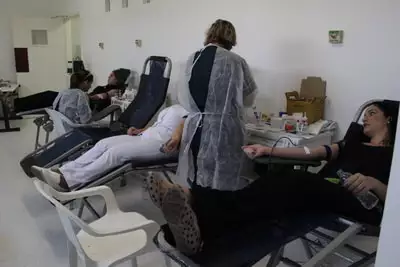
Also part of the constant concern of the São Leopoldo Mandic Faculty is the promotion of socio-environmental projects and actions, that is, projects that go beyond a purely environmental perspective. Among the campaigns developed in this sense are the Blood Donation campaign, which has already resulted in the donation of more than 210 bags of blood, and the Vaccination campaign, the latter generally aimed at employees and students of the Faculty.

However, SLMANDIC is its service to the community through dental clinics, where the only cost charged to the patient is for the materials used during treatment.

The São Leopoldo Mandic in Campinas (SP) alone performs approximately 75,000 dental procedures per year. Furthermore, the Faculty's courses can be tailored to the needs of the local community and include subjects that develop the perspective of medical and dental professionals on regional needs.

The São Leopoldo Mandic College also has partnerships with companies, government entities, and non-profit organizations to promote interaction and dialogue among various sectors of society.

In this way, SLMANDIC remains firm in its objective of training socially responsible professionals who contribute to a better Brazil.

Concerned with society and with its students and employees, Faculdade São Leopoldo Mandic maintains constant control over the disposal of infectious, chemical, and sharps waste through the Health Services Waste Management Program – PGRSS, and establishes guidelines on the subject through a Biosafety Committee and Coordination Office.

The Solid Waste Management Plan (PGRSS) is based on federal resolutions RDC No. 306, from the National Health Surveillance Agency – ANVISA; No. 357 and 358, from the National Environment Council – CONAMA; NR-32, from the Ministry of Labor and Employment – ​​MTE; state resolution SMA-33, from the State Secretariat for the Environment; and the State Solid Waste Policy, through Law No. 12.300/06. One of the PGRSS's initiatives is the educational project "Conscious Disposal Program," which ensures a complete infrastructure in SLMANDIC, making the college a conducive environment for adopting ethical and responsible attitudes.

It is worth remembering that biosecurity is the conduct recommended by respected national and international organizations to reduce the possibility of health risks to students, staff, and faculty of the Faculty. The main focus is on preventive actions, which aim to reduce exposure to biological agents (biological risk), noise, ionizing or non-ionizing radiation (physical risk), as well as contact with potentially toxic, carcinogenic, or irritating products (chemical risk).

Standard precautionary measures include the use of Personal Protective Equipment (PPE), which helps prevent exposure to blood and bodily fluids; ensuring proper sterilization methods; employing correct waste disposal; and having adequate infrastructure in healthcare facilities.

Learn more about the types of healthcare waste:

  • Infectious waste: waste that may contain biological agents (bacteria, viruses, fungi, or parasites) and that, due to their pathogenic characteristics, may present a risk of infection. This type of waste consists of plates and slides from microbiology laboratories, animal carcasses, anatomical parts, tissues, materials containing blood and bodily fluids.
  • Sharps waste: These are objects and instruments that have sharp edges, points, rigid and pointed protrusions capable of cutting or piercing, such as blades, needles, glass ampoules, drills, files, metal matrices, and all broken glassware. The presence of sharps among infectious waste can not only cause injuries but also infections if they are contaminated by virulent microorganisms.
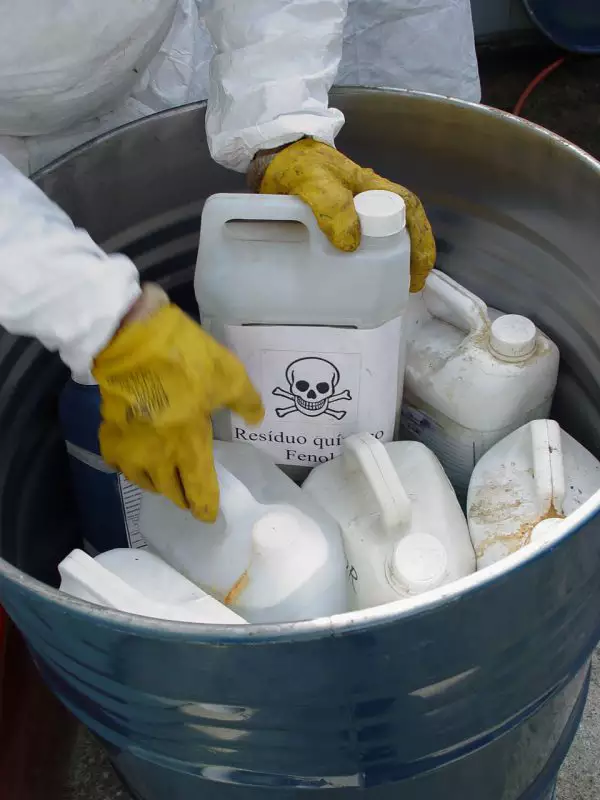
  • Chemical waste: This consists of chemical substances that may pose a risk to public health or environmental contamination due to their flammability, corrosiveness, reactivity, and toxicity. Examples include expired medications, disinfectant waste, waste containing heavy metals, laboratory reagents, and effluents from image processors.

The Biosafety Committee of the São Leopoldo Mandic Faculty is an independent body whose purpose is to develop protocols, actions, and teaching materials aimed at implementing biosafety precautions following the standards established by MANDIC.

The Commission has basically two responsibilities:

  1. To plan and develop the Biosafety Protocol for the Clinic, the Biosafety Protocol for Employees, the Health Services Waste Management Plan, and the Responsible Disposal Program.
  2. To oversee the actions of the Biosafety Coordination Unit responsible for the execution and training of the aforementioned protocols.

Members of the Biosafety Committee:

Coordination

  • Professor Dr. Juliana Cama Ramacciato – Lecturer

Members

  • Professor Dr. Almenara de Souza Fonceca Silva – Lecturer
  • Flávia Maria Ferroni Ribeiro Dias – Technologist in Environmental Management
  • Professor Dr. Flávia Martão Flório – Lecturer
  • Prof. Dr. Rogério Heládio Motta – Lecturer

The Biosafety Coordination Office of the São Leopoldo Mandic Faculty aims to guide, disseminate, and monitor students, faculty, and staff regarding compliance with the Clinical Biosafety Protocol, the Staff Biosafety Protocol, the Health Service Waste Management Program, and the Conscious Disposal Program. In addition, the MANDIC also prepares and updates the list of materials that students and the Institution are responsible for to ensure proper compliance with the Biosafety Protocols, and promotes preventive ergonomic measures among students and staff, as well as referring staff and students to reference centers in case of accidents involving exposure to biological agents.

The Coordination Office also promotes vaccination campaigns for employees and students as part of the active immunization program against tetanus, diphtheria, hepatitis B, measles, mumps, and rubella. The Coordination Office is also responsible for acquiring and distributing necessary materials or contracting outsourced services for biosafety protocols, which include items such as Personal Protective Equipment (PPE), collection carts, and others.

See the other responsibilities of the Biosafety Coordination Office at SLMANDIC:

  • To develop and implement an Environmental Policy;
  • To oversee the maintenance of water filters and drinking fountains, the cleaning of the water tank, and the pest control process;
  • To carry out the monitoring of ionizing radiation through a radiation protection plan in conjunction with the Radiology Department;
  • Warn those in charge if the Biosafety Protocol is not followed;
  • To establish the responsibilities of teachers, management, department heads, faculty, and students at SLMANDIC regarding awareness and application of biosafety standards.

It is also the duty of the teachers at São Leopoldo Mandic to instruct students on the importance of complying with biosafety standards and to monitor them.

Control your privacy

Our website uses cookies to improve navigation. Information

Privacy Policy Terms of Use Opt-out
Cookie settings
close

Who can use your cookies?

    Value your privacy
    ×
    São Leopoldo Mandic University
    • Do you authorize the use of cookies?

      We use cookies on our website, both our own and third-party cookies, to ensure proper functioning, improve your user experience, personalize content throughout this website, perform usage analysis, recommend content based on your preferences, display advertisements on other websites that may be of interest to you, and facilitate interaction on social networks.

    • Traffic analysis

      We use cookies to analyze user behavior on the website.

    • Marketing

      We use cookies to show ads on other websites that may be of interest to you and to facilitate interaction on social media.

    • Multimedia

      Some cookies may be created when playing content from external sources.

    If you have any questions or concerns regarding your privacy or the handling of your personal data by CENTRO DE PESQUISAS ODONTOLÓGICAS SÃO LEOPOLDO MANDIC SS LTDA, please send them by email to our DPO: privacidade@slmandic.edu.br
    Cookie settings

    Which course are you looking for?

    Select the type of course you are looking for below: